 英语
 中文简体
 西班牙语

Product Consultation
Your email address will not be published. Required fields are marked *
Content
You have 200 cotton tees due Friday, 60 polyester running jerseys due the week after, and the customer wants the same artwork on both. That single order is why so many shops end up comparing direct to garment (DTG) with direct to film (DTF). The short answer: DTF covers a far wider fabric range and handles mixed orders with lower machine risk, while DTG still produces the softest, most breathable prints on pure cotton. Whichever route you lean toward, the consumables you buy, especially the transfer film, influence the final result more than most buyers expect.
DTG works like an inkjet printer for clothing. Water-based inks are sprayed directly into the fibers of a pre-treated garment, so the design sits inside the fabric rather than on top of it. Light garments need little or no pretreatment; dark garments require a white underbase plus a pretreatment coat, which adds a production step and some stiffness. The process is simple to run, but it depends heavily on fabric composition: the higher the cotton content, the better the ink bonds.
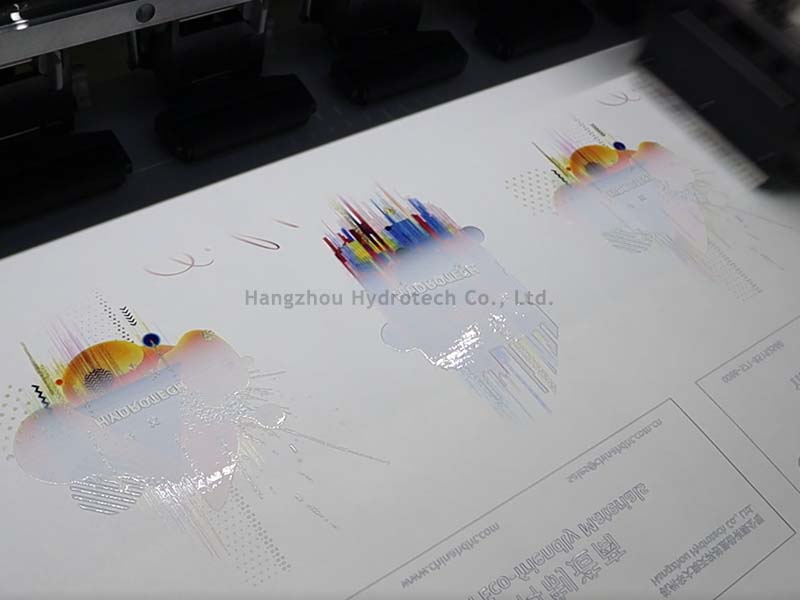
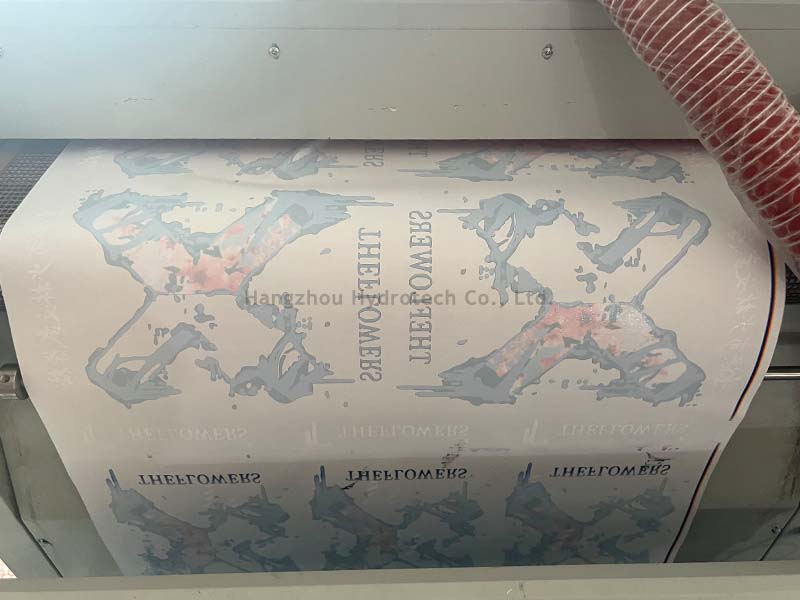
DTF moves the image in two stages. The workflow itself is straightforward:
Press settings are forgiving but not arbitrary: most films bond at 150-170°C with 10-20 seconds of dwell and firm, even pressure, then peel hot or cold depending on the film specification. Because the adhesive grips virtually any textile surface, the same artwork transfers onto cotton, polyester, blends, nylon and even coated canvas.
Before the details, here is the comparison most production managers ask for first.
| Factor | Direct to garment (DTG) | Direct to film (DTF) |
|---|---|---|
| Fabric compatibility | Best on 100% cotton; blends need testing | Cotton, polyester, blends, nylon and most textiles |
| Hand feel | Ink sits inside the fibers; softest result | Thin flexible layer on the surface; slight texture |
| Wash durability | Good on cotton, may fade sooner | Crack-resistant when pressed and cured correctly |
| Color on dark garments | Needs pretreatment and a white underbase | White ink layer gives strong opacity on black |
| Order size | Single pieces and small runs | One piece to thousands through gang sheets |
| Upfront investment | Printer, pretreatment and curing equipment | Modest printer, powder unit and heat press |
| Consumable waste | Pretreatment and misprints | Single-use carrier film; paper-based film cuts plastic |
Conclusion first: pressed correctly, DTF transfers generally survive repeated washing better than DTG prints on comparable garments, but DTG offers a softer surface that customers notice the moment they put the shirt on.
DTG prints bond with the fiber itself, so there is no added layer to crack or peel, and photographic gradients render beautifully on white cotton. The weaknesses appear on dark garments, where a heavy white underbase can feel stiff, and after dozens of hot washes, where DTG color can fade noticeably.
DTF builds a thin elastomeric layer that stretches with the fabric and resists cracking, which is why it performs well on performance wear and children's clothing. Its durability, however, is earned in production: powder that has not fully melted, pressure that is too light, or a film that releases unevenly will lift at the edges within a few wash cycles. Run a 20-30 wash trial on any new film and powder combination before you commit to volume. For a deeper look at this topic, this durability and washability comparison of DTF transfers against other methods covers the variables that matter.
DTG earns its keep in three situations: pure-cotton fashion tees where softness sells, one-off on-demand orders where every design is different, and shops that do not want to hold inventory. If that describes your order book, DTG is hard to beat, but budget for the operating reality of inkjet equipment. Printheads need daily circulation and cleaning, and a machine left idle for two weeks can clog badly enough to need service. That maintenance burden is a real cost, and it is the most common surprise for first-time DTG buyers.
DTF pulls ahead as soon as your fabric list widens or your orders bunch into batches. One setup handles cotton tees, polyester jerseys, canvas totes and caps that could never pass through a DTG machine. Gang sheets let you print dozens of designs in a single film pass, and finished transfers can be stored flat and sealed for pressing later, which smooths out production peaks. The trade-offs sit in the workflow: powder application needs ventilation, cured powder must be kept dry, and every extra handling step is a chance for dust or fingerprints to spoil a print.
Ask an experienced operator what separates a reliable DTF shop from a struggling one and the answer is rarely the printer. It is the film, the powder and the discipline of the press. A good carrier film holds ink on its surface without bleeding, releases cleanly at the set temperature, lies flat instead of curling in the printer, and does not build static that attracts lint.
The standard carrier has long been PET film, which is strong and inexpensive per sheet but made from petroleum-based plastic. It is also single-use. A mid-sized shop can consume thousands of film sheets a month, and every one of them goes straight into the waste stream, raising disposal costs and drawing questions from brand customers with sustainability targets.
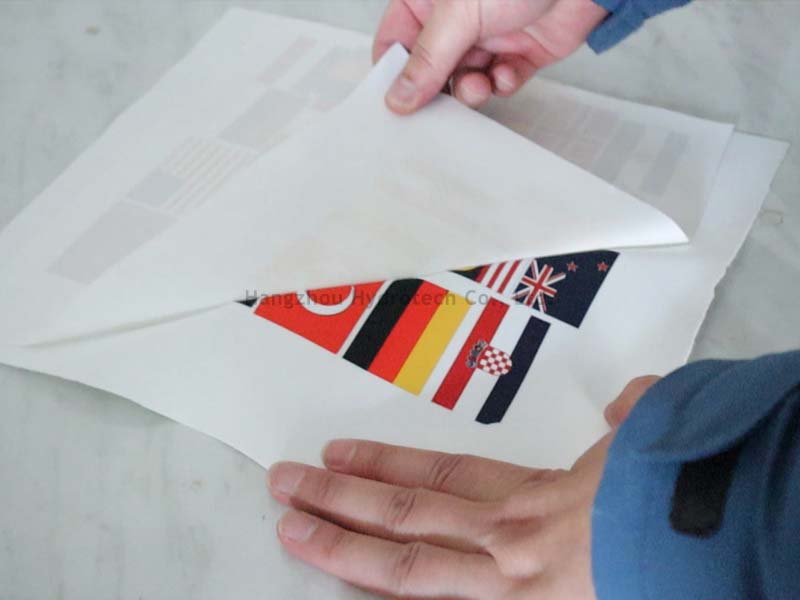
Paper-based heat transfer film was developed to solve exactly this problem. It uses a coated paper carrier that runs through the same print, powder and press workflow, then departs from PET where it matters: less plastic in production waste and a carrier that is far easier to dispose of responsibly. Material suppliers such as Hangzhou Hydrotech have invested in this shift, combining a coating chemistry background with films engineered for clean release and wash durability.
 Richol Paper-Based DTF Heat Transfer FilmA paper-carrier DTF film from Hydrotech designed to cut plastic waste in the print-powder-press workflow. Hot or cold peel, recyclable, and wash durable, it suits shops seeking cleaner DTF production across cotton, polyester, nylon and more.View Product →
Neither DTG nor DTF is the whole story, because neither method dyes the fiber. On 100% polyester sportswear, dye sublimation turns the ink into a gas under heat and bonds it inside the yarn itself, leaving no layer to feel, crack or peel, so the decoration lasts as long as the garment. The limits are real: it requires a high-polyester fabric and works best on white or light backgrounds, which is why it complements rather than replaces the other two methods. If performance wear on white polyester is part of your catalog, pairing a quality sublimation transfer paper with a calendar press remains the benchmark that DTG and DTF cannot match on hand feel.
Sublimation Transfer Paper for Polyester Performance WearHydrotech's sublimation papers come in weights from 29 to 125 gsm with fast drying and vivid, high-definition transfer. They pair with a calendar press to dye white polyester sportswear, delivering a hand feel DTG and DTF cannot match.View Product →The honest verdict is that neither technology wins everywhere. DTG rewards shops built around soft, cotton, made-to-order work; DTF rewards shops that need one system to cover many fabrics and order sizes; and sublimation still owns white polyester performance wear. Choose by fabric mix, order profile and waste policy first, then choose your consumables as carefully as you choose your machines. The film and powder in your line decide what your customer feels after the first wash and the fiftieth.
Your email address will not be published. Required fields are marked *

 Tel: 0086-571-85192560
 E-mail: [email protected]
 Add: No.599 Baiyunyuan East Road, Tonglu Economic Development Zone, Hangzhou.