 英语
 中文简体
 西班牙语

Product Consultation
Your email address will not be published. Required fields are marked *
Content
A customer sends you two jobs in the same week: 200 dark cotton hoodies with a detailed full-color logo, and 30 polyester running jerseys with gradient numbers. If you only own one printing method, one of those jobs becomes a compromise. That trade-off is what the direct to film vs direct to garment comparison really comes down to.
Here is the short answer first. DTG (direct to garment) produces the softest, most breathable print on 100% cotton and suits light-colored, one-off and small-batch work. DTF (direct to film) presses a flexible ink-and-adhesive layer onto nearly any fabric, including cotton, polyester, blends, and nylon, without pre-treatment, and it holds up better to repeated washing on dark garments. Neither method wins everywhere; the right choice depends on your fabric mix, order sizes, and how much pre-press labor you can absorb.
This guide explains how each process works, compares them on the factors that affect production, and looks at where a third method, dye sublimation, fits alongside both.
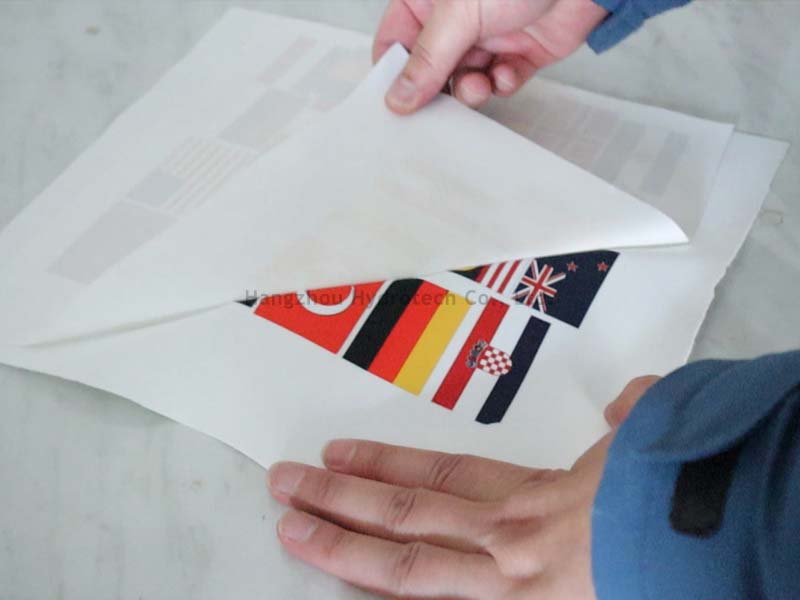
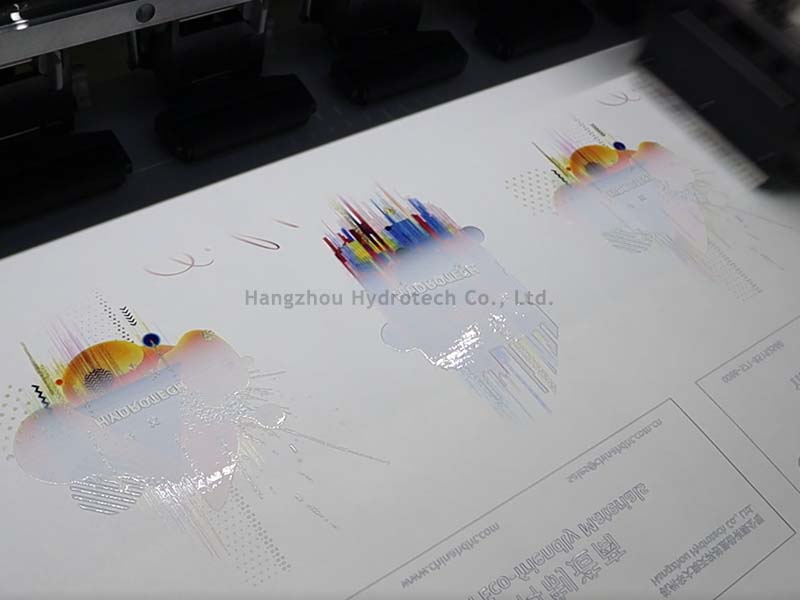
DTF is a transfer process. The artwork is printed in mirror onto a carrier film with DTF inks, then coated with hot-melt adhesive powder while the ink is still wet. Heat melts the powder into the ink layer, creating a self-contained transfer that can be pressed immediately or stored. A heat press, typically 150-160°C for 10-15 seconds depending on film and fabric, bonds the design to the garment, and the carrier peels away hot or cold according to its specification.
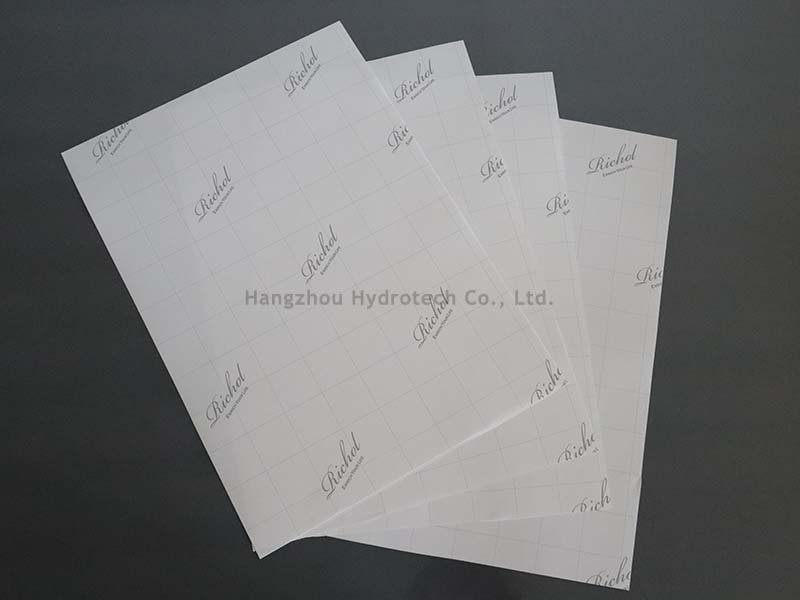
Two things decide whether a DTF print survives the wash: the adhesive bond and the film itself. The carrier is not a passive sheet. It controls how evenly ink sits on the surface, how cleanly it releases under peel tension, and whether the finished transfer resists curling and wrinkling. Traditional carriers are PET plastic films; paper-based films have emerged as a lower-plastic alternative that peels cleanly and cuts plastic consumption. It is exactly this layer that we manufacture:
DTF paper-based heat transfer film Richol Paper-Based DTF Heat Transfer FilmA paper-based DTF carrier supporting hot and cold peel, strong ink absorption, and recyclability. The preceding discussion of how film choice affects wash durability and peel quality explains why this lower-plastic alternative merits attention.View Product →
DTG is a direct process. A purpose-built inkjet printer sprays water-based pigment ink straight into the fabric, where it anchors to the fibers. Light garments need little more than a preheat; dark garments must first be sprayed with a pre-treatment solution so the white ink underbase can sit on the surface instead of soaking away. After printing, a heat press cures the ink.
Fabric choice is part of the system. DTG chemistry is formulated for natural fibers, which is why 100% combed cotton delivers the sharpest result. Fifty-fifty cotton-polyester blends print with slightly muted color, and high-polyester fabrics are poor candidates because standard DTG ink does not bond reliably to them and dye migration can shift the printed color over time.
The reward for those constraints is hand feel. Because ink sits inside the fiber rather than on top of it, a DTG print is soft, flexible, and breathable, with no added layer to feel at all. That is why retail fashion tees still default to this method.
Both methods are digital. Both print full-color artwork without screens or setup charges, and both make one-off orders economical. Where they part ways is everything that happens around the print head.
| Factor | DTF | DTG |
|---|---|---|
| Fabric compatibility | Cotton, polyester, blends, nylon, canvas, leather, caps and hard-to-press items | Best on 100% cotton; acceptable on cotton-rich blends; unreliable on polyester |
| Pre-treatment | None required | Required on dark and colored garments |
| Hand feel | Thin flexible layer on the surface; softens after the first wash | Ink inside the fiber; the softest, most breathable result |
| Wash durability | Elastic adhesive resists cracking; strong wash results when press parameters are right | Good on light cotton; darks can fade as the pre-treatment bond ages |
| Workflow | Print, powder, cure, press; transfers can be made in bulk and applied on demand | Pre-treat, print, heat cure; each garment is finished individually |
| Key consumables | Carrier film, hot-melt powder, DTF ink | Pre-treatment fluid, DTG ink, cleaning solutions |
| Best fit | Mixed-fabric catalogs, dark garments, batch transfer production | Light cotton fashion tees, photographic prints, single-piece orders |
Two cost realities sit behind the table. Equipment: entry-level machines for both start in the low thousands, but a serious DTF line pairs the printer with a powder shaker and curing oven, while a production DTG printer carries a higher price and a daily maintenance ritual of ink circulation, capping, and purging to keep heads from clogging. A DTG printer left idle over a weekend can cost you a morning of cleaning. Labor: DTF moves part of production into a batch step, so 200 transfers can be printed in one run and pressed as orders arrive. That decoupling of printing from garment stock is the quiet reason many decorators add DTF even when they already own a DTG printer.
Durability is where the two methods trade blows. A well-made DTF transfer stretches with the fabric and resists cracking because the design sits on an elastic adhesive layer rather than being absorbed into cotton fibers that fade on their own. Its weak points are process control: under-pressing, excessive peel tension, or a film with uneven release will show up as lifting edges within a few wash cycles. For a deeper look at the wash-cycle testing and the process variables behind it, our guide to the durability and washability of DTF transfers compared with other decoration methods covers the details.
DTG prints age differently. On light cotton, pigment ink inside the fiber holds color well when garments are washed cold and turned inside out. On dark garments, print life depends on the pre-treatment bond, and hot washing plus tumble drying accelerates the fading DTG is often criticized for. In practice, a shop that controls press temperature, dwell time, and pressure will usually get longer life from DTF on darks, while a shop selling premium cotton tees can justify DTG with clear care labeling.
If you are deciding what to buy into, these are the decision lines that come up most often in production settings.
For 100% polyester, including running jerseys, cycling kits, and team uniforms, dye sublimation often beats both methods. Sublimation ink turns to gas under heat and dyes the polyester fiber itself, leaving no surface layer: the print cannot crack, peel, or fade short of damaging the fabric. Its limits mirror DTG's, only reversed: it needs light-colored, high-polyester substrates, so it cannot serve the cotton side of a catalog. Many shops therefore run sublimation for polyester work and DTF for everything else. In that workflow the transfer paper matters as much as the printer, because coating quality governs how much ink is released during pressing; a high-transfer-rate paper keeps colors dense and leaves less residue behind.
sublimation transfer paperSublimation Transfer Paper for Polyester PrintingAvailable in weights from 29 to 125 gsm with fast drying and a high transfer rate, this paper suits the polyester dye-sublimation workflow described, where coating quality governs color density and residue.View Product →Whichever method wins your floor, consumable quality decides whether output stays consistent week after week, so evaluate suppliers on specifics rather than price alone.
It also pays to buy from a transfer media manufacturer with in-house coating R&D rather than a reseller. Our development team has formulated coated transfer papers and films since 2001, which means test rolls, adjusted specifications, and a real answer when a transfer starts behaving differently after a process change on your side.
The direct to film vs direct to garment question is not a search for a single winner; it is a match between method and order profile. Mixed fabrics, dark garments, and batch production point to DTF. The softest cotton tee in the bag points to DTG. Regular polyester sportswear brings sublimation into the set, and plenty of successful shops run two or all three side by side. Before committing to volume, run your chosen media through your own press. Temperature, dwell time, and peel behavior interact with your specific fabrics in ways no specification sheet fully predicts, and a one-day sample test costs far less than a pallet of the wrong consumables.
Your email address will not be published. Required fields are marked *

 Tel: 0086-571-85192560
 E-mail: [email protected]
 Add: No.599 Baiyunyuan East Road, Tonglu Economic Development Zone, Hangzhou.